
What if the very skills that got you your first promotion are now holding you back from the next one?
Hi, I’m Jennifer Dettloff-Carter from Healing You Hypnotherapy in San Diego. I work with professional women just like you. Many feel stuck, despite their strong technical abilities. They wonder why advancement feels so difficult.
The workplace has changed. A recent study shows that 71 percent of employers now value a specific set of people skills more than pure technical expertise. This shift is crucial for anyone aiming for leadership roles.
This guide is here to help. We will explore a practical set of abilities that can transform your career. You will learn how to navigate complex workplace relationships and manage stress with confidence.
Whether you’re seeking a promotion or aiming to lead more effectively, developing these capabilities can be your game-changer. It’s a journey of growth, and you don’t have to walk it alone.
Key Takeaways
- Technical skills alone are often insufficient for career advancement in today’s environment.
- A majority of employers prioritize people-focused abilities when evaluating candidates.
- These skills are essential for effective leadership and managing workplace dynamics.
- Developing these competencies is a practical process that can reduce stress.
- Personalized support is available to help you build confidence and achieve your goals faster.
Introduction: Unleashing Your Emotional Intelligence Journey
Many accomplished women discover that their hard skills alone can’t propel them to the next level of leadership. If you’ve felt this way, you’re certainly not alone. This is where emotional intelligence becomes the crucial differentiator.
Why is this skill set so vital? It enables you to coach teams effectively, manage stress gracefully, and deliver feedback that actually lands. Technical abilities simply can’t address these human dynamics.
Your journey begins with a fundamental shift: viewing your feelings not as obstacles, but as valuable information sources. They guide better decisions and build stronger connections with colleagues.
Learning to work with your emotions creates lasting change in how you experience work. You’ll interact with people more effectively and navigate leadership challenges with newfound confidence.
This path is personal for everyone, yet the core principles apply universally. You can develop these capabilities at any career stage. As workplaces evolve, this skill set becomes essential for building trust and creating environments where people truly thrive.
Remember, developing emotional intelligence doesn’t demand perfection. It requires willingness, practice, and sometimes guidance from someone who understands the process thoroughly.
What is Emotional Intelligence?
In today’s collaborative work environments, there’s a special set of abilities that separates good performers from great leaders. This capability goes beyond technical expertise and taps into how we understand ourselves and connect with others.
Defining Emotional Intelligence
At its core, emotional intelligence is the ability to understand and manage your own feelings while recognizing and influencing the emotions of people around you. It’s about being smart with feelings—both yours and others’.
This skill isn’t about suppressing emotions or always being positive. Instead, it’s about developing the awareness to understand what you’re feeling and why. This awareness helps you respond in ways that serve you and your relationships.
Historical Context and Evolution
The term “emotional intelligence” was first coined in 1990 by researchers John Mayer and Peter Salovey. Psychologist Daniel Goleman later popularized the concept, showing how EQ often matters more than IQ for success.
Over the decades, this ability has evolved from a psychological concept to a recognized business competency. Organizations now actively seek these strengths in their people and leaders.
The good news is that everyone starts at different levels with emotional intelligence. It’s a learnable skill that can be developed with practice, awareness, and the right support.
emotional intelligence for professionals
What separates truly exceptional professionals from their peers often comes down to how they handle interpersonal dynamics. This capability transforms everyday workplace interactions into opportunities for growth and connection.
Applying these skills in professional settings means navigating difficult conversations with confidence. It involves leading teams through organizational change while maintaining composure during high-pressure situations.
Many companies now recognize that employees with strong interpersonal capabilities deliver better results. This understanding has led organizations to prioritize these abilities during hiring and promotion decisions.
For professional women, developing these competencies can be particularly transformative. It helps in setting healthy boundaries and building relationships that support career advancement without burnout.
Whether managing projects or working with diverse teams, these skills provide tools for handling complexity effectively. With focused training and practice, professionals at any level can see measurable improvements in their performance and success.
Core Components of Emotional Intelligence
At the heart of emotional intelligence lie four essential components that create a powerful synergy. These building blocks work together to help you navigate both your inner world and your connections with others.
Self-Awareness and Self-Management
Self-awareness forms the foundation. It’s your ability to recognize your own feelings and understand how they influence your actions. Surprisingly, research shows that while 95% of people think they’re self-aware, only 10-15% actually are.
Self-management builds on this awareness. It’s your capacity to handle emotions in healthy ways, especially during challenging moments. This skill helps you control impulsive reactions and maintain composure under pressure.
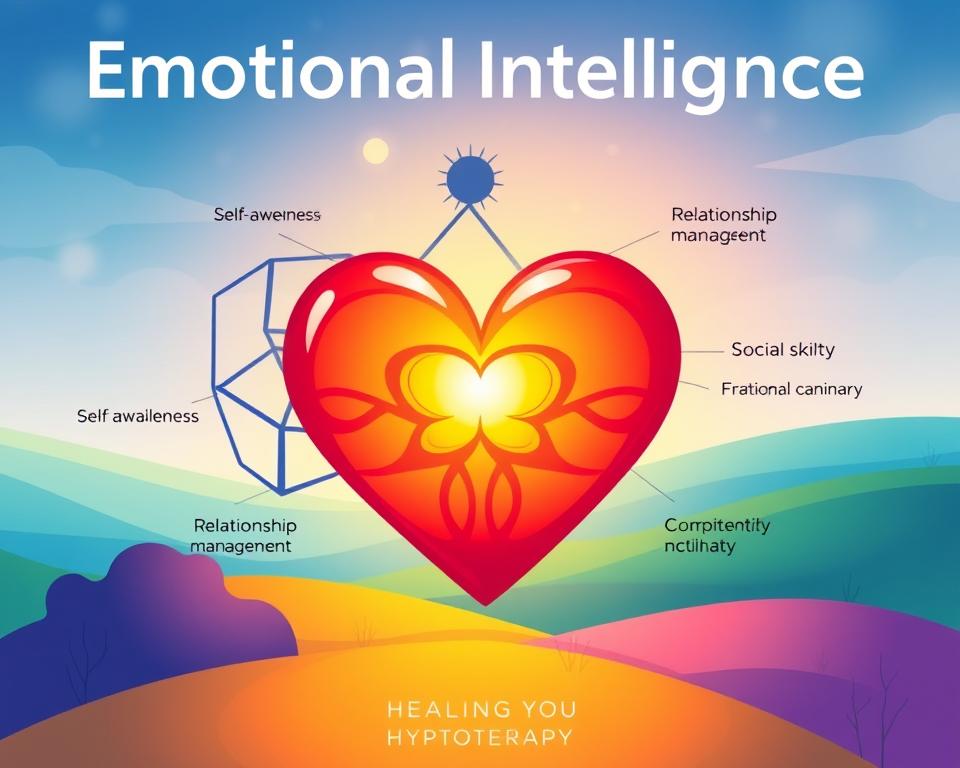
Social Awareness and Relationship Management
Social awareness involves tuning into others’ emotions and practicing empathy. You learn to read nonverbal cues and understand team dynamics. This awareness helps leaders connect authentically with their people.
Relationship management applies all these skills to build strong connections. It’s about clear communication, constructive conflict resolution, and inspiring others through your leadership presence.
These components build on each other naturally. You can’t effectively manage what you’re not aware of. Developing these abilities takes practice, but the payoff is significant for how you experience work and lead teams. Many find that working with someone who understands these accelerates their growth in managing professional complexities.
The Impact of Emotional Intelligence on Leadership and Team Dynamics
Modern leadership success hinges on creating environments where people feel heard, valued, and motivated to contribute. This approach transforms how teams function and achieve results.
Leaders with strong emotional capabilities build trust naturally. They respond thoughtfully rather than reacting impulsively to challenges.
Enhancing Collaboration and Conflict Resolution
Effective leaders understand team dynamics deeply. They recognize unspoken tensions and address them before they escalate.
Research shows that every unaddressed conflict wastes about eight hours of company time. Skilled leaders resolve issues constructively, saving valuable resources.
| Traditional Approach | EQ Leadership | Impact on Team |
|---|---|---|
| Command-and-control | Collaborative guidance | Higher engagement |
| Avoiding conflict | Proactive resolution | Better communication |
| Task-focused only | People-centered | Stronger relationships |
Fostering Empathy in the Workplace
Empathy ranks as the number one leadership skill according to global research. Managers who demonstrate care perform over 40% higher in key areas.
This isn’t about being soft—it’s about understanding what drives performance. When employees feel respected, job satisfaction increases dramatically.
Developing these capabilities through training can transform entire organizational cultures. Jennifer offers personalized support to strengthen your leadership presence.
Strategies to Develop Your Emotional Intelligence
Building your people skills is a journey that starts with simple, daily practices anyone can implement. You can improve these abilities at any career stage through consistent effort. These strategies aren’t complicated, but they do require commitment and awareness.

Mindfulness, Journaling, and Active Listening
Mindfulness helps you stay present with your feelings rather than getting swept away. This creates space between feeling and reacting, allowing for better management and reduced stress.
Journaling is a powerful tool to improve awareness. Record daily how your emotions influenced decisions and interactions. This reflection helps identify patterns for conscious change.
Active listening develops empathy and understanding of others. Put away distractions and focus completely on what people say. Show engagement through paraphrasing and nonverbal cues.
Practical Self-Assessment Tools
360-degree assessments provide valuable feedback for your development. Compare your self-evaluation with input from managers, colleagues, and team members. This reveals blindspots in your leadership.
Pay attention when you experience strong feelings. Pause to reflect on what triggered them and what they might be telling you. This practice builds your ability to understand both your own landscape and that of others.
While these strategies can be practiced independently, many professionals find that working with someone trained in this development accelerates learning. If you’d like personalized guidance, email me directly at Jennifer@HealingYouHypnotherapy.com or call (858) 289-6015 to discuss how we can help build your skills together.
Practical Applications in the Workplace
Your heart races as you prepare to give critical feedback to a valued colleague. This moment tests your ability to manage emotions under pressure. How you handle it can either damage trust or strengthen your relationship.
Stress management is perhaps the most common workplace application. When you can maintain clarity during tense situations, you make better decisions. You avoid reactions you might regret later.
Managing Stress and Difficult Conversations
Leaders who struggle with self-management often react impulsively. They damage relationships with employees when stressed. Those with strong capabilities pause, breathe, and respond thoughtfully instead.
Difficult conversations become opportunities rather than experiences to dread. Awareness of both your feelings and the other person’s state helps navigation. You approach these interactions with empathy and skill.
Improving Communication and Engagement
Communication improves when you read nonverbal cues effectively. Body language, tone, and facial expressions reveal how people truly feel. This awareness goes beyond their words alone.
Workplace engagement deepens when you understand what matters to teams. Tuning into others’ experiences and needs builds connection. Employees feel respected and heard rather than stressed.
| Reactive Approach | Thoughtful Response | Impact on Teams |
|---|---|---|
| Immediate emotional reaction | Pause and breathe first | Reduces team anxiety |
| Avoiding tough discussions | Addressing issues calmly | Builds trust over time |
| Missing nonverbal signals | Reading body language | Improves understanding |
Conflict at work is inevitable. When approached with these skills, it strengthens relationships. You resolve issues constructively instead of letting them waste productivity.
These practical applications create workplaces where people feel engaged. According to research on leadership effectiveness, managers who develop these capabilities see measurable improvements in team performance.
Learning to apply these skills takes practice. Having support from someone who understands both concepts and challenges can accelerate your growth. You’ll navigate workplace dynamics with greater confidence and success.
Real-Life Success Stories and Professional Benefits
The real proof of any development journey comes when you see tangible results in your daily work life. Research confirms that emotional intelligence is the strongest predictor of performance across various roles.
Personal Transformations with Jennifer Dettloff-Carter
Jennifer has guided professional women through remarkable changes in their careers. Her personalized approach combines practical strategies with deeper emotional work.
Clients report experiencing less stress and building better relationships. They gain confidence in leadership situations and develop the ability to manage challenging dynamics effectively.
Measurable Impacts on Career Development
The benefits extend beyond individual growth to affect entire teams and organizations. When leaders develop their people skills, employee engagement increases significantly.
Science-backed training translates neuroscience into practical tools. Professionals see improved performance reviews and successfully navigate leadership opportunities.
Meaningful change is possible at any career stage. The investment in developing these capabilities delivers lasting professional benefits and career advancement.
Ready for a Change? Feel Better Fast Strategy Session
The insights you’ve gained so far point toward one powerful next step in your professional growth. If you’ve read this far, you likely recognize that developing your emotional intelligence could be the positive change you need.
This awareness can help you feel more confident, capable, and calm in your work life. It’s time to explore what’s possible for you.
Get in Touch: Email Jennifer at Jennifer@HealingYouHypnotherapy.com or Call (858) 289-6015
I invite you to a free, no-pressure Feel Better Fast Strategy Session with Jennifer Dettloff-Carter. This is your opportunity to discuss specific challenges like workplace stress or improving your leadership presence.
During our session, you’ll receive personalized insights into how emotional intelligence training could benefit your unique situation. We’ll address your specific goals rather than offering generic advice.
You’ll also experience a gentle, guided taste of hypnotherapy. This helps you understand how working with your feelings and mindset can create immediate positive shifts.
CLICK HERE to schedule your free session
There’s absolutely no obligation—this is simply a chance to explore whether this approach feels right for you. Experience what it’s like to have someone truly understand your professional challenges.
Got questions? Email me directly at Jennifer@HealingYouHypnotherapy.com or call (858) 289-6015. I’m here to help you navigate your next steps.
Better yet, CLICK HERE to schedule your free session. Talk through your challenges and experience how this work can help you feel lighter and calmer right away.
Investing in your growth isn’t just about professional skills. It’s about creating a work life where you feel more in control and connected to people and teams. You’ll develop the ability to manage whatever comes your way with confidence.
Conclusion
Your commitment to reading this far demonstrates your readiness for meaningful professional transformation. Emotional intelligence represents one of the most valuable capabilities you can develop for your career. It impacts everything from managing stress to building strong relationships.
Unlike technical skills that may become outdated, this ability only grows more valuable over time. The journey looks different for everyone, whether focusing on understanding emotions or improving how you connect with others.
Wherever you are in your career, strengthening your emotional intelligence can help you feel more confident and capable. You don’t have to navigate this path alone. Working with someone who understands this development can provide personalized support.
If you’re ready to explore how this could transform your professional life, reach out to Jennifer at Jennifer@HealingYouHypnotherapy.com or call (858) 289-6015. Your investment in learning shows you’re already on the path toward growth.
FAQ
How does developing these skills help with managing stress at work?
When you build your ability to understand and manage your own feelings, you can handle pressure better. This self-management leads to clearer thinking during tough situations, reducing overall stress and improving your performance.
Can these abilities really improve my leadership development?
A> Absolutely. Strong leaders use empathy and social awareness to connect with their teams. By improving these skills, you enhance communication, build trust, and create a more engaged and productive work environment, which are hallmarks of effective leadership.
What’s a simple first step I can take to start building these capabilities?
A great starting point is mindful listening. In your next conversation, focus completely on understanding the other person’s perspective without planning your response. This small habit boosts your social awareness and is a foundation for stronger relationships.
How does this relate to resolving conflict within a team?
These skills are key to conflict resolution. They allow you to recognize emotions in yourself and others, helping to de-escalate tension. By approaching disagreements with empathy, you can find common ground and collaborative solutions more effectively.
Is there a way to measure my current level in this area?
Yes, there are several respected self-assessment tools available, like the EQ-i 2.0®. These assessments provide insights into your strengths and areas for growth, giving you a clear starting point for your personal development journey.