
Introduction
Here’s something I want you to know right from the start: if you’re reading this because you constantly forget important deadlines, struggle to start tasks even when you desperately want to, or feel like your brain just won’t cooperate with what you’re trying to accomplish—you’re not broken, lazy, or incapable. What you’re experiencing has a name: adult ADHD executive dysfunction.
Executive dysfunction in adults with ADHD isn’t a character flaw or a lack of trying hard enough. It’s a recognizable pattern of executive function challenges that affects how your brain manages planning, focus, emotional regulation, and follow-through. And here’s the genuinely hopeful part: research shows that with the right combination of treatment and strategies, most adults with ADHD see significant improvements in their executive function skills and daily functioning.
Throughout this guide, you’ll discover what adult ADHD executive dysfunction actually means, why it happens in your brain, how it shows up in real life, and most importantly—the evidence-based treatments and practical strategies that can help you manage ADHD symptoms and build a life that works for your unique brain. Whether you’re newly diagnosed, seeking answers, or looking for better ways to cope with executive function deficits, you’ll find actionable information that respects both the science and your lived experience.
Article Roadmap:
- Understanding what executive dysfunction means in the context of attention deficit hyperactivity disorder
- The core executive functions affected by ADHD and how they impact daily life
- Why adults with ADHD commonly struggle with cognitive control and self-regulation
- Evidence-based treatments including ADHD medication, therapy, and lifestyle changes
- Practical, hopeful strategies you can start using today to work with your brain instead of against it
Key Takeaways
Adult ADHD executive dysfunction isn’t laziness or lack of willpower—it’s a brain-based pattern where your mental control center struggles with planning, focus, and emotional regulation. Here’s what you need to know:
- Executive functions are your brain’s CEO skills (working memory, impulse control, planning, time management) that help you navigate daily life, but attention deficit hyperactivity disorder disrupts these networks
- Typical problems include time blindness, task initiation paralysis, emotional regulation challenges, and that “I know what to do but can’t make myself do it” feeling that shows up at work, home, and relationships
- ADHD is the formal diagnosis found in the diagnostic and statistical manual, while “executive dysfunction” describes the symptom cluster—many conditions can cause executive function challenges, but ADHD is one of the most common in adults
- Evidence-based treatments work: research shows cognitive behavioral therapy improves task completion by 40-60%, ADHD medication helps 70% of adults with focus and impulse control, and practical strategies can significantly improve daily functioning
- You’re not broken—if you’re struggling with bills, deadlines, and follow-through in adulthood, this is a recognized pattern of adult ADHD that can be addressed, even if you were never diagnosed as a child

What Is Executive Dysfunction in Adults with ADHD?
Here’s the thing: “executive dysfunction” describes a cluster of ADHD symptoms affecting planning, focus, self-control, and emotional regulation, rather than a standalone medical diagnosis. Think of it as your brain’s management system having some glitches—and that’s completely normal for many adults with ADHD.
Executive dysfunction can show up in various conditions like ADHD, depression, traumatic brain injury, or early dementia, but in adults, attention deficit hyperactivity disorder is one of the most common causes. Your frontal lobes and related brain networks are supposed to help you start tasks, prioritize, switch gears, remember future intentions, and regulate emotions in real time. But when you have adult ADHD, these executive function skills are chronically underpowered or inconsistent.
This leads to that frustrating “I know what to do but I can’t make myself do it” experience across work, home, and relationships. You might know exactly how to organize your closet or respond to that important email, but somehow you just… don’t. And then you beat yourself up about it, which makes everything worse.
Some clinicians and researchers use informal labels like “executive function disorder” for long-standing symptoms, but this term doesn’t appear as an official diagnosis in the diagnostic and statistical manual or other medical classification systems. Instead, we focus on identifying the underlying conditions—like ADHD—that explain these patterns of executive dysfunction.
Let me give you some concrete examples: missing rent payments in May 2023 and again in September 2024, not because you don’t have the money, but because the task just never quite makes it from your brain to your behavior. Or repeatedly forgetting to reply to important work emails, even though you’ve read them three times and know they’re urgent. Sound familiar? You’re definitely not alone in experiencing these executive function challenges.
Core Executive Functions and How They Break Down in Adult ADHD
Executive functioning refers to an umbrella of mental skills that help you manage life like a competent adult—and when ADHD disrupts these skills, daily functioning gets a lot harder. Research over the past 20-30 years shows that adults with ADHD typically score 10-15 points lower on standardized executive functioning scales than their non-ADHD peers, which explains why you might feel like you’re constantly swimming upstream.
Let’s break down the key executive functions and see how they typically go sideways in adult ADHD. Understanding these patterns can help you stop blaming yourself and start working with your brain instead of against it.
Working Memory
Working memory is your brain’s mental notepad—it holds and manipulates information for a few seconds to minutes while you use it. When it’s working well, you can keep a phone number in mind long enough to dial it, remember verbal instructions from a meeting, or track multiple steps while cooking a new recipe.
But here’s what happens when ADHD hijacks your working memory: you lose track mid-task constantly. You walk into a room and forget why you’re there. You read an email three times and still don’t act on it because the information just doesn’t stick around long enough to translate into action.
In adult roles, this shows up as forgetting what your partner just asked while they’re still talking, losing track of your talking points during a 2024 Zoom presentation, or misplacing important documents like your 2023 tax forms between rooms. The frustrating part? This isn’t a global memory problem—you probably remember vivid events perfectly. It’s specifically about holding and using information during tasks, and it’s exhausting.
The good news is that working memory challenges respond well to external supports like written lists, voice memos, and visual reminders—strategies we’ll explore in detail later in this guide.
Inhibitory Control (Impulse Control and Emotional Regulation)
Inhibitory control is your brain’s pause button—the ability to stop before acting, speaking, or reacting emotionally, and to resist distractions. When this executive function is working, you can think before you speak, resist impulse purchases, and stay focused even when something more interesting catches your attention.
ADHD-related inhibition control problems look like blurting in meetings, interrupting others (even when you know it’s rude), making impulsive online purchases at 2 AM, or reacting sharply during conflict before your thinking brain catches up. The emotional impulsivity piece is huge—sudden anger, tears, or quitting a task after a minor setback at work, even when you later regret it completely.
Poor impulse control also explains why you doom-scroll for hours, rapidly switch between tasks without finishing any, or have difficulty staying seated through a 60-minute meeting. It’s not that you don’t care about being professional—your brain just struggles to filter out internal distractions like intrusive thoughts, worries, or that really interesting article someone just shared in Slack.
Many adults with ADHD find that addressing emotional regulation challenges through therapy and medication significantly improves their relationships and work performance. You can learn to manage emotions more effectively, even when your brain wants to react immediately.
Cognitive Flexibility (Set Shifting)
Cognitive flexibility, or set shifting, is your brain’s ability to move smoothly between tasks or mental frameworks, adapt to new information, and change plans when needed. Most people can pivot relatively easily when circumstances change, but adults with ADHD often get stuck.
You might hyperfocus on a minor detail and lose sight of the bigger picture, struggle to switch from one project to another, or become completely overwhelmed when routines change unexpectedly. Here’s a concrete example: you’re deep in focused coding at 3:00 PM when a 3:05 PM team call pops up. Instead of smoothly transitioning, you either show up late and flustered, or avoid the call entirely because the mental gear-switching feels impossible.
This rigidity can masquerade as procrastination, perfectionism, or what people call “ADHD paralysis”—when you know you need to do something but feel frozen because the next steps feel unclear or overwhelming. In relationships, it shows up as having trouble moving on after a disagreement or struggling when your partner wants to change evening plans on short notice.
Understanding that cognitive flexibility is an executive function skill you can develop—not a fixed personality trait—opens the door to practical strategies that make transitions easier and less anxiety-producing.
Planning and Organization
Planning involves forecasting the steps, time, and resources needed for a goal and keeping them organized over days or weeks. Think planning a move in June 2025 or preparing for a certification exam in October 2024—these require sustained, organized thinking across time.
Adults with ADHD consistently underestimate how long tasks will take, skip crucial steps, or start too late, even after promising themselves they’ll “do it differently this time.” Your digital files are probably a disaster, your home office might look like a paper tornado hit it, and you’ve got half-finished DIY projects scattered around.
The planning struggles often become glaringly obvious during life transitions—starting college, beginning a new job, becoming a parent—when external structure decreases and you’re expected to create your own systems. You might forget required paperwork before a medical appointment or realize at the last minute that you need three different documents for something important.
Remember: these planning challenges reflect brain-based differences in executive functions, not a lack of caring about outcomes. You probably care more than most people—you just need different strategies to get from caring to doing. And those strategies exist and work beautifully for many people with ADHD.
Decision-Making and Problem-Solving
Executive decision-making involves weighing options, forecasting consequences, and managing emotions well enough to choose effective actions. For adults with ADHD, this can be a wild swing between two extremes: impulsive decisions (like quitting a job in frustration) and complete “analysis paralysis” (like being unable to choose between two apartments before a lease deadline).
The ongoing executive fatigue that comes with ADHD makes even small decisions exhausting. What to cook for dinner, which email to answer first, whether to attend a social event—these seemingly minor choices can drain your mental battery because your brain is already working overtime just to function.
Chronic stress, sleep problems, and co-occurring anxiety or depression (which are super common with ADHD) further cloud problem-solving abilities. Understanding these patterns helps normalize why ordinary life administration can feel abnormally hard and why you sometimes avoid decisions until they become crises.
The encouraging reality is that decision-making skills can be strengthened through specific strategies and therapeutic approaches designed for adults with ADHD—you’re not destined to struggle with this forever.
Time Management and “Time Blindness”
Time management encompasses estimating how long things take, planning sequences, and tracking time as it passes. Many adults with ADHD describe “time blindness”—a difficulty sensing time passing where 10 minutes can turn into 90 minutes when you’re hyperfocused on something interesting online.
This shows up as chronic lateness to 9:00 AM meetings, repeatedly missing payment due dates, starting tax preparation in late April every year, or staying up until 2:00 AM despite having early commitments the next day. Without strong internal timing cues, you rely heavily on external supports like alarms, calendars, and other people, which can make you feel “out of sync” with social and professional expectations.
The good news? Improving time management and time awareness is a core target in treating ADHD and coaching, and there are concrete strategies that really help. The key is accepting that you need external scaffolding for time—and that’s perfectly legitimate, not a personal failing. Many successful adults with ADHD use multiple timers, visual schedules, and structured routines to manage time effectively.
Why Adult ADHD So Often Involves Executive Dysfunction
ADHD is a neurodevelopmental condition that begins in childhood but often persists into adulthood, affecting around 4-5% of U.S. adults according to population studies between 2006-2022. While hyperactive little kids running around classrooms get most of the attention, adult ADHD is very real and often more impairing than the childhood version.
The diagnostic and statistical manual defines ADHD by patterns of inattention and/or hyperactivity-impulsivity, but these observable behaviors are really expressions of underlying executive function differences. Think of core ADHD symptoms like the tip of the iceberg—underneath are disrupted brain networks that affect how you plan, focus, and regulate yourself.
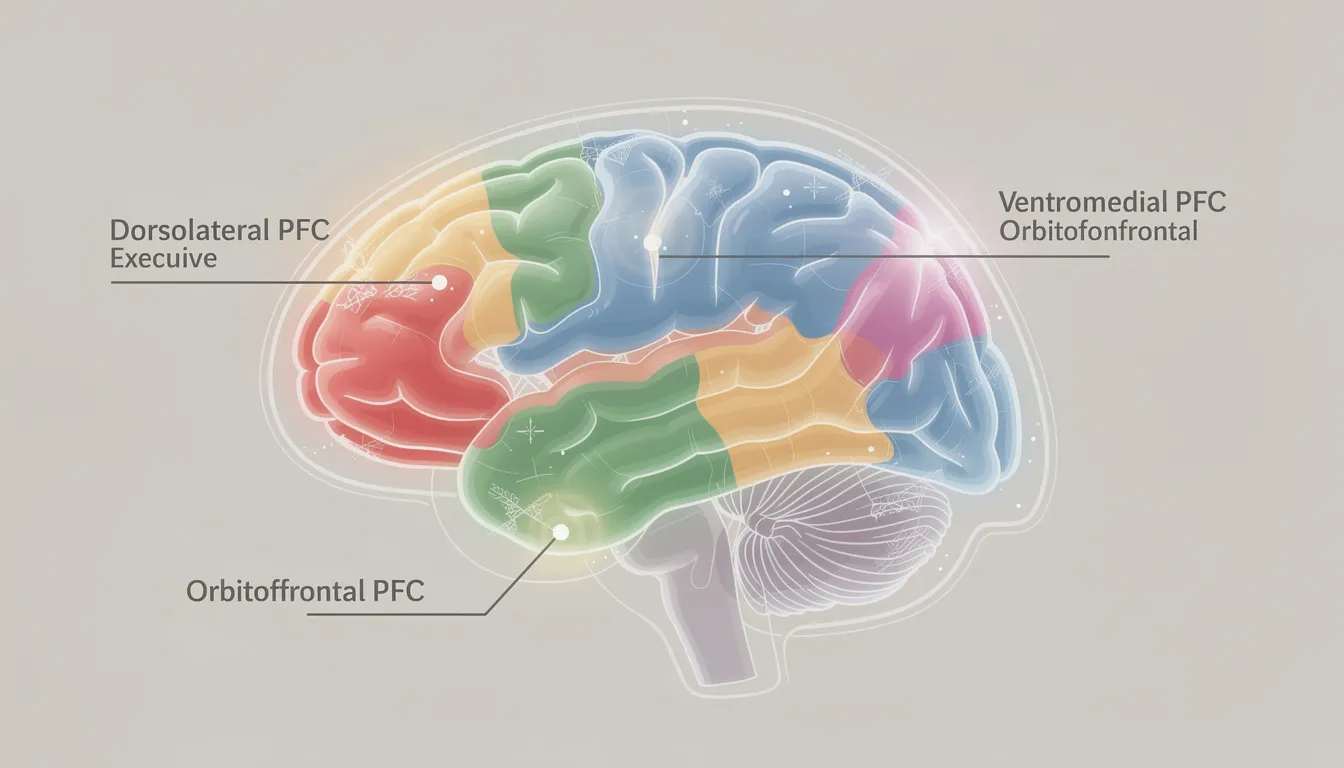
Current neuroscience shows that ADHD involves differences in the prefrontal cortex and its connections with the basal ganglia, cerebellum, and default mode network. These same brain networks that underlie cognitive regulation also manage dopamine and norepinephrine signaling, which explains why ADHD medication targeting these neurotransmitters can be so helpful.
Here’s something important: because executive networks don’t fully mature until the late twenties, adults with ADHD may show a 30-40% developmental delay in executive function skills compared to similarly aged peers. This means a 30-year-old with ADHD might function more like a typical 18- to 20-year-old when it comes to self-regulation, which explains why you might feel perpetually behind your peers.
Executive dysfunction explains why intelligent, motivated adults with ADHD often underperform relative to their abilities, especially as external structure drops after high school or university. And here’s the kicker: ADHD rarely occurs alone. Anxiety, depression, sleep disorders, and substance use can all further impair executive functioning and should be assessed as separate issues requiring their own treatment.
The hopeful truth is that understanding these brain-based differences helps you approach treatment strategically—you’re not fighting against a character flaw, you’re working with a recognized medical condition that responds to targeted interventions.
Adult ADHD vs. Executive Dysfunction: What’s the Difference?
Listen, I get it—you probably heard about “executive dysfunction” first, maybe on TikTok or Reddit or from a friend, and now you’re wondering if that automatically means you have ADHD. Here’s the breakdown that’ll help you understand what you’re actually dealing with.
ADHD is a formal psychiatric diagnosis with specific criteria laid out in the diagnostic and statistical manual. Getting this diagnosis requires meeting symptom clusters, duration requirements, age of onset criteria, and showing impairment across multiple life settings. It comes with insurance codes, established treatment guidelines, and legal protections.
“Executive dysfunction,” on the other hand, is a descriptive phrase for how someone’s cognitive control is working. It’s like saying someone has a fever—it tells you something’s not quite right, but it doesn’t tell you whether they have the flu, strep throat, or something else entirely.
Here are the key differences:
- ADHD = specific diagnostic criteria, insurance coverage, structured treatment protocols for managing ADHD symptoms
- Executive dysfunction = cross-diagnostic symptom pattern describing executive function challenges, not billable alone, assessed through rating scales and cognitive tests
Executive dysfunction can appear in ADHD, autism, major depressive disorder, traumatic brain injury, long-COVID cognitive issues, chronic pain conditions, and more. In clinical practice, marked executive dysfunction in an adult often triggers an ADHD evaluation, but careful assessment is needed to rule out other causes like a 2020 head injury, uncontrolled bipolar disorder, or early neurodegenerative disease.
If you’re recognizing yourself in multiple sections of this article, that’s a sign to seek a professional ADHD assessment rather than self-diagnosing based only on executive struggles. The person’s ability to get an accurate diagnosis can make a huge difference in finding the right treatment approach and getting the right support for your specific situation.
How Executive Dysfunction in ADHD Shows Up in Everyday Adult Life
Picture this: You wake up 20 minutes late because your phone died overnight and you forgot to set a backup alarm. You scramble to join a 9:30 AM video call, realizing mid-meeting that you forgot to review the agenda. After the call, you notice a bill reminder that you meant to pay yesterday—again. You skip lunch because you got hyperfocused on a project, then stay up until 2 AM doom-scrolling because your brain finally feels “ready” to relax. Sound familiar?
In the workplace, executive function challenges show up as missed deadlines despite working long hours, difficulty focusing on long-term projects, overflowing email inboxes, and performance reviews that mention “great potential but inconsistent execution.” You might be brilliant at problem-solving but struggle with the mundane follow-through that actually gets things done.
At home, the challenges multiply: clutter that seems to regenerate overnight, unfinished chores creating ongoing tension, repeated arguments about “not doing your share,” and forgetting important events like your kid’s school presentation or your partner’s medical appointment. It’s not that you don’t care—your brain just doesn’t reliably bridge the gap between intention and action.
Executive Function Challenges in Relationships and Social Settings
The relationship effects can be devastating. Partners or friends might misinterpret your executive difficulties as disinterest, unreliability, or lack of care. This leads to guilt and shame cycles that make everything worse, because now you’re not just struggling with tasks—you’re also managing the emotional fallout from other people’s reactions to your struggles with executive dysfunction.
Many adults with ADHD report that emotional regulation challenges create significant tension in close relationships. You might react more intensely to minor frustrations, have trouble letting go of disagreements, or struggle to manage your emotional responses during conflicts. These patterns aren’t about being a “difficult person”—they’re symptoms of how ADHD affects the brain’s emotional control systems.
Long-Term Impact of Untreated Executive Dysfunction
Long-term research tracking adults diagnosed with ADHD between 1990-2020 shows higher rates of job changes, financial instability, and traffic violations. This validates that these patterns are documented and real, not personal character flaws. The emotional toll includes chronic stress, low self-esteem, learned helplessness, and fear of taking on new responsibilities because past attempts have gone badly.
But here’s what I want you to remember: these struggles don’t define your worth or potential. They’re symptoms of a medical condition that responds to treatment, not permanent character defects. With the right combination of support, strategies, and interventions, adults with ADHD can build satisfying careers, maintain healthy relationships, and achieve their goals in daily life.
Diagnosis: How Clinicians Evaluate Adult ADHD and Executive Function
There’s no blood test or brain scan for ADHD—diagnosis combines a detailed medical history, behavior checklists, and sometimes cognitive testing. A good adult ADHD evaluation feels comprehensive but not overwhelming, and it should validate your experiences rather than making you jump through hoops to “prove” you’re struggling enough.
Key components of a modern adult ADHD evaluation include a clinical interview covering both childhood and current symptoms, collateral information from a partner or parent when possible (though not always necessary), and screening for anxiety, mood disorders, sleep issues, trauma history, and substance use. All of these can either mimic ADHD symptoms or make real ADHD symptoms worse.
Assessment Tools for Executive Dysfunction
You’ll likely complete rating scales like the Adult ADHD Self-Report Scale, Barkley Deficits in Executive Functioning Scale, or BRIEF2A. These capture real-life executive problems like time management, organization, and emotional control in ways that standard psychological tests might miss. They’re designed to reflect how executive function challenges actually show up in daily life, not just in artificial testing situations.
Neuropsychological testing using tools like a continuous performance test might be recommended in complex cases to distinguish ADHD from learning disorders, brain injuries, or early cognitive decline. These tests can measure things like sustained attention, working memory, and inhibition control under controlled conditions.
Remember: executive dysfunction itself isn’t “diagnosed” separately. Instead, clinical psychologists and other mental health professionals identify the underlying conditions—such as ADHD, depression, or neurological issues—that explain the pattern of difficulties you’re experiencing.
Preparing for Your ADHD Evaluation
Before your evaluation, document concrete examples over several weeks: late payments, missed appointments, unfinished projects, emotional outbursts. This helps clinicians see the functional impact beyond just symptom checklists, and it can speed up the assessment process.
Be prepared to discuss your medical history in detail, including any past brain injuries, sleep problems, or other health conditions that might affect executive functioning. This context helps ensure you get an accurate diagnosis and appropriate treatment recommendations.

Treatment Options for ADHD-Related Executive Dysfunction
Here’s some genuinely good news: multiple evidence-based treatments exist for adult ADHD, and research shows that combining medication with skills-based therapy yields the best outcomes. You don’t have to white-knuckle your way through life feeling perpetually behind and overwhelmed.
Treatment is highly individualized—what works brilliantly for one adult (like stimulants plus coaching) might be completely wrong for another (who might need a non-stimulant medication plus CBT and workplace accommodations). The goal isn’t to become a “perfectly organized person” overnight. It’s to reduce impairment: fewer crises, more predictability, and sustainable routines that actually work for your specific brain.
Let’s walk through the main approaches that can help you manage ADHD symptoms effectively and improve your executive function skills in practical, meaningful ways.
Medication for Adult ADHD
Stimulant medications like methylphenidate medication and amphetamine formulations are first-line treatments in many adult ADHD guidelines in North America and Europe. These improve attention, working memory, and impulse control for many adults by boosting dopamine signaling in those underactive prefrontal networks.
For people who can’t tolerate stimulants or have certain medical risks, non-stimulant options include atomoxetine, guanfacine XR, and viloxazine. These work differently but can still significantly improve executive function skills over time.
In everyday terms, ADHD medication often makes task initiation easier, improves your ability to persist with boring tasks, enhances your capacity to filter distractions, and reduces emotional reactivity. You might find that you can actually sit through meetings, remember what you walked into a room to get, or respond to emails within a reasonable timeframe.
Common side effects include reduced appetite, insomnia, and increased heart rate, which is why medical monitoring is crucial. It’s also important to give accurate medical history and avoid using non-prescribed medications, which can be dangerous and won’t give you useful information about whether medication might help you.
Here’s the key point: medication is a tool that makes executive skills easier to access, but it doesn’t automatically create systems or habits. You still need behavioral strategies—medication just makes them actually workable instead of impossibly hard. Think of it as turning the volume down on the noise that makes executive functioning so difficult.
Cognitive Behavioral Therapy and Other Psychotherapies
ADHD-focused CBT is structured therapy that specifically targets procrastination, perfectionism, negative self-talk, and practical organization skills. It’s not general talk therapy—it’s focused skill-building designed for how ADHD brains actually work.
Sessions typically include setting concrete weekly goals, learning to break overwhelming tasks into manageable steps, discovering how to use planners and reminders effectively, and challenging beliefs like “I’ll never be able to change” or “I should be able to do this like everyone else.” The goal is building sustainable systems that work with your executive function challenges rather than against them.
CBT and related approaches like dialectical behavior therapy (for emotional regulation) and acceptance and commitment therapy can also treat co-occurring anxiety and depression, which significantly worsen executive dysfunction when left untreated. Many people don’t realize how much their mood affects their ability to manage daily tasks until both issues are addressed simultaneously.
Research shows that adults with ADHD who receive CBT alongside medication experience better outcomes than those using either treatment alone. The combination helps you develop compensatory strategies while the medication makes those strategies easier to implement consistently.
Look for therapists who specifically list adult ADHD, executive dysfunction, or neurodiversity-affirming practice in their profiles. Generic counseling, while potentially helpful for other issues, often isn’t equipped to address the specific cognitive and behavioral patterns involved in ADHD executive dysfunction.
The expansion of telehealth options after 2020 has made ADHD-focused CBT much more accessible for many adults, especially those in areas with limited local specialists.
Hypnotherapy as an Adjunctive Treatment for Adult ADHD
Hypnotherapy for adult ADHD has a small but growing evidence base that’s genuinely encouraging for people seeking additional support alongside standard treatments. While it’s not a replacement for medication or CBT, emerging research suggests hypnotherapy can provide meaningful improvements in core ADHD symptoms, particularly when used as a complementary approach.
What the Research Shows
A randomized controlled trial from Finland compared hypnotherapy plus usual care to a control condition in adults with ADHD. Participants receiving hypnotherapy showed significantly greater improvements on self-report ADHD measures, especially in activation, attention, and working memory subscales. They also reported better mood and quality of life, with no treatment drop-outs—suggesting the approach is both effective and well-tolerated.
What’s particularly interesting is that most participants were already on ADHD medication, indicating that hypnotherapy provides additional benefits beyond what medication alone offers. This positions hypnotherapy as a valuable adjunct rather than a standalone replacement for evidence-based medical care.
In a follow-up study comparing short hypnotherapy to brief CBT for adults with ADHD, both treatments led to symptom reduction, but hypnotherapy showed better long-term outcomes on ADHD symptoms and on general psychological well-being, anxiety, and depression at six-month follow-up. Symptom scores in the hypnotherapy group continued to decrease over time, suggesting gains may consolidate after treatment ends—a hopeful finding for anyone concerned about maintaining improvements.
How Hypnotherapy Helps Executive Function
Research using a continuous performance test (a standard measure of sustained attention) found that hypnotic suggestions significantly decreased reaction times in attention tasks for both ADHD and control groups. In ADHD participants, reaction times were longest before hypnosis and became faster after induction and suggestions, pointing to a direct mechanism for improving vigilance and speed of responding.
The neuroscience is fascinating: neural areas modulated by hypnosis overlap with regions implicated in ADHD, suggesting that hypnosis may help adjust both bottom-up and top-down attentional processes. This explains why people often experience improved focus, reduced impulsivity, and better emotional regulation after hypnotherapy sessions.
Practical Benefits in Daily Life
Adults with ADHD who incorporate hypnotherapy into their treatment often report improvements in:
- Enhanced focus and concentration during boring or repetitive tasks
- Reduced impulsivity in decision-making and emotional reactions
- Decreased stress and anxiety that often accompany executive function struggles
- Better habit formation around organization, study skills, and time management
- Improved emotional regulation and stress response patterns
How Hypnotherapy Works for ADHD
During a hypnotherapy session, you enter a deeply relaxed yet focused state where your mind becomes more receptive to positive suggestions. A trained hypnotherapist guides you through this process, helping you access subconscious patterns that drive procrastination, distraction, or impulsive behaviors.
For someone with ADHD, hypnotic suggestions might target specific executive function challenges: visualizing yourself easily starting tasks, feeling calm and focused during important projects, or automatically reaching for helpful habits instead of distracting ones. Because you’re in a relaxed state, these suggestions can bypass the conscious resistance that often makes behavioral change so difficult for people with ADHD.
The process typically involves multiple sessions over several weeks, with many practitioners offering 6-8 sessions as a short-term intervention. Some adults continue with periodic “booster” sessions to maintain gains, while others find that the initial series provides lasting improvements.
Important Considerations
While the research is promising, it’s crucial to understand that hypnotherapy for ADHD is still in the “emerging/adjunctive” category rather than an established first-line treatment. Current evidence comes from a few high-quality trials and case reports, so broader systematic reviews still position CBT, mindfulness, and cognitive remediation as having the strongest evidence for adult ADHD.
That said, for adults already receiving standard ADHD treatment who want additional support—particularly around stress management, emotional regulation, and habit formation—hypnotherapy offers a research-supported option worth considering. The long-lasting improvements seen in follow-up studies are especially encouraging, suggesting that hypnotherapy doesn’t just provide temporary relief but helps create genuine shifts in how your brain manages attention and impulse control.
Finding Qualified Hypnotherapy Support
If you’re interested in exploring hypnotherapy as part of your ADHD treatment plan, look for licensed mental health professionals who specialize in both ADHD and clinical hypnotherapy. This dual expertise ensures they understand the specific executive function challenges you’re facing and can tailor hypnotic suggestions to address them effectively.
Hypnotherapy should complement—not replace—your medication regimen and other evidence-based treatments. The goal is building a comprehensive support system where each intervention strengthens the others, giving you the best possible outcome for managing adult ADHD executive dysfunction.
ADHD Coaching, Occupational Therapy, and Skills Training
ADHD coaching is a practical, future-focused service that helps you build daily systems around your actual brain rather than the brain you wish you had. Unlike therapy, which might process past experiences, coaching focuses on “What do you want to accomplish, and what’s getting in the way?”
Professional ADHD coaches help with concrete goals like creating a realistic weekly schedule for a demanding hybrid job, setting up automated bill-paying systems, or practicing smooth transitions between tasks using timers and other tools. It’s incredibly practical and often pairs beautifully with therapy, hypnotherapy, or medication.
Occupational therapists with ADHD expertise can help design both physical and digital environments that compensate for working memory and planning deficits. Think visual cueing systems, simplified workspaces, and structured routines that reduce the cognitive load of daily decisions.
Group skills programs—often 8-12 week courses offered by clinics or universities—provide both education and peer strategies. There’s something powerful about learning alongside other adults who really get why putting bills in the same place every time feels like rocket science.
Remember: coaching isn’t a substitute for medical care, but it can be incredibly helpful for turning insights from therapy or hypnotherapy into actual daily behavior change. Many adults find that coaching provides the practical scaffolding they need to successfully implement the strategies they learn in other treatments.
Workplace, School, and Environmental Accommodations
Many adults are legally entitled to reasonable accommodations at work or university once formally diagnosed under laws like the Americans with Disabilities Act in the U.S. or similar protections in other countries. These aren’t “special treatment”—they’re adjustments that level the playing field for people with ADHD.
Typical workplace accommodations include flexible deadlines when appropriate, written instructions following meetings, access to quiet workspaces or noise-canceling headphones, permission to stand or move during long tasks, and breaking large projects into staged deliverables with regular check-ins.
To pursue formal accommodations, document how executive dysfunction affects your performance and discuss options with HR, disability services, or supervisors when you feel safe doing so. A brief letter from a clinician outlining recommended accommodations can be helpful.
Even without formal accommodations, you can modify your environment: use visible whiteboards for important reminders, invest in clear storage bins so you can actually see what you own, or create dedicated “launch pads” near your door for keys, wallet, and work bags.
Environment design is a core part of reducing executive load, not an optional luxury. Your space should work for your brain, not against it. Small changes in how you organize your physical and digital environments can make a significant difference in your daily functioning.
Lifestyle and Brain-Health Strategies
Lifestyle changes aren’t cures for ADHD, but they can meaningfully support executive functioning when combined with appropriate medical and psychological treatment. Think of them as the foundation that makes other interventions more effective.
Consistent sleep schedules are crucial—chronic sleep debt or untreated sleep apnea can dramatically worsen attention and emotional control. If you’re regularly getting less than seven hours or your sleep quality is poor, addressing this can improve executive function more than you might expect.
Regular physical activity (even 20-30 minutes of moderate exercise most days) positively affects dopamine and norepinephrine levels while reducing stress. You don’t need to become a fitness influencer—just moving your body regularly helps your brain regulate better and supports better executive functioning.
A balanced diet and steady blood sugar can support better focus and mood stability. Limiting excessive alcohol or cannabis use is also important, as these can interfere with sleep quality and medication effectiveness. A balanced diet that includes regular meals helps prevent the blood sugar crashes that can worsen ADHD symptoms.
Start with realistic, small changes rather than attempting complete lifestyle changes all at once. Perfectionistic wellness plans often backfire for adults with executive dysfunction, so pick one area to focus on at a time. Building sustainable habits gradually works better than dramatic overhauls that you can’t maintain.
Exploring Alternative and Complementary Approaches
While evidence-based treatments like medication and therapy form the foundation of effective ADHD treatment, some adults find that complementary approaches provide additional support for managing executive dysfunction. The good news is that research on these approaches continues to grow, giving us better guidance on what actually works.
Hypnotherapy for Adult ADHD: What Makes It Different
Unlike general relaxation techniques, clinical hypnotherapy for ADHD involves structured sessions with a trained professional who guides you into a focused state of awareness where your mind becomes more receptive to positive behavioral changes. This isn’t about losing control or being “put under”—you remain aware and in control throughout the process.
The emerging research on hypnotherapy for adult ADHD is genuinely exciting. Studies from Finland and other research centers show that adults receiving hypnotherapy alongside their usual ADHD care experienced significant improvements in attention, activation, working memory, and mood. What’s particularly hopeful is that these improvements lasted at least six months after treatment ended, suggesting the changes aren’t just temporary.
One study directly compared hypnotherapy to CBT for adults with ADHD and found that while both approaches helped, hypnotherapy showed better long-term outcomes on ADHD symptoms, anxiety, depression, and general psychological well-being at six-month follow-up. The hypnotherapy group’s symptom scores actually continued to improve over time, which is remarkable.
How Hypnotherapy Addresses Executive Function
Research using a continuous performance test—a gold-standard measure of sustained attention—found that hypnotic suggestions significantly improved reaction times in attention tasks for people with ADHD. Participants were slowest before hypnosis and became progressively faster after the induction and targeted suggestions, demonstrating a direct impact on vigilance and response speed.
The neuroscience helps explain why this works: brain regions modulated by hypnosis overlap significantly with areas affected by ADHD. Hypnotherapy appears to help regulate both automatic (bottom-up) and intentional (top-down) attention processes, which is exactly what people with ADHD struggle with in daily life.
Practical Applications
In clinical practice, hypnotherapy for adult ADHD typically focuses on:
- Enhancing sustained focus during boring or repetitive tasks that would normally trigger distraction
- Reducing impulsivity by strengthening the “pause” between urge and action
- Managing stress and anxiety that often accompany executive function struggles
- Building automatic habits around organization, time management, and task initiation
- Improving emotional regulation and breaking cycles of frustration or overwhelm
Sessions usually run 6-8 weeks initially, with many adults experiencing noticeable improvements within the first few sessions. Some people benefit from occasional “booster” sessions to maintain gains, while others find the initial series provides lasting changes.
Important Context
While hypnotherapy shows real promise, it’s important to be realistic about where it fits in ADHD treatment. Current research places it in the “emerging adjunctive” category—meaning it’s a valuable complement to established treatments like medication and CBT, but shouldn’t replace them entirely.
The research so far comes from a small number of high-quality studies rather than decades of extensive trials. That said, the studies we do have are well-designed, show consistent positive results, and demonstrate lasting improvements—which is more than can be said for many other complementary approaches.
Finding Qualified Hypnotherapy for ADHD
If you’re considering hypnotherapy as part of your ADHD treatment, look for practitioners who:
- Are licensed mental health professionals (psychologists, therapists, counselors)
- Have specific training in clinical hypnotherapy (not just “hypnotists”)
- Understand adult ADHD and executive function challenges
- Position hypnotherapy as complementary to your other treatments
- Can explain their approach in concrete, evidence-based terms
At Healing You Hypnotherapy in San Diego, I work with adults whose ADHD symptoms create challenges with stress management, emotional regulation, and habit formation. While hypnotherapy isn’t a replacement for medication or traditional therapy, it can provide valuable support for the executive function struggles that persist even with standard treatment. If you’re already working with a prescriber or therapist and want to explore how hypnotherapy might enhance your existing treatment plan, I’d be happy to discuss whether this approach might be right for you.
Mindfulness and Meditation
Mindfulness and meditation have stronger evidence bases than most complementary approaches, showing modest but meaningful improvements in attention and emotional regulation when practiced consistently over time. These approaches work well alongside established treatments like medication and cognitive behavioral therapy, particularly for managing stress and improving self-awareness.
Many adults with ADHD find that brief, structured mindfulness exercises (5-10 minutes) work better than lengthy meditation sessions. The key is finding practices that fit your specific brain rather than forcing yourself into traditional meditation formats that might not work for people with ADHD.
Some research suggests that combining mindfulness practices with hypnotherapy can be particularly effective, as both approaches help you develop greater awareness of your automatic patterns while creating space for intentional change.
Working with Integrative Practitioners
If you’re interested in exploring integrative approaches like hypnotherapy, meditation, nutrition counseling, or other complementary treatments, discuss them with your primary treatment team to ensure they complement rather than conflict with your main treatment plan. The goal is building a comprehensive support system that addresses ADHD from multiple angles.
Remember that while complementary approaches can be valuable additions to your treatment plan, they work best when combined with evidence-based core treatments that directly target the neurological and behavioral aspects of ADHD. Think of it as building a treatment team where each member brings different strengths to support your overall functioning.

Self-Help Strategies to Work With (Not Against) Your ADHD Brain
While professional support is ideal, many adults see meaningful improvements by experimenting with small, concrete strategies designed for how ADHD brains actually function. The key is starting with 1-3 strategies that feel doable for the next week rather than trying to revolutionize your entire life overnight.
These aren’t “life hacks” that promise to cure executive dysfunction—they’re practical accommodations that reduce the cognitive load of daily tasks so you can use your mental energy for things that matter to you.
Getting Started When You Feel “Stuck”
That “knowing what needs to be done but being unable to initiate” feeling is one of the most frustrating aspects of ADHD executive dysfunction, especially for boring, complex, or emotionally loaded tasks. The secret is working with your brain’s actual patterns instead of fighting them.
Try micro-starts: commit to just 5 minutes, or complete only the first tiny step like opening the document, gathering bills in one pile, or finding the phone number you need to call. Often, starting is the hardest part, and momentum builds once you’re in motion.
Use body-based cues to interrupt inertia: stand up, change locations, or do a quick movement break like walking around the block. Physical movement can reset your nervous system and make task initiation feel less overwhelming.
Consider externalizing the start through “body doubling”—working alongside someone else over video, scheduling co-working sessions with friends, or booking brief accountability check-ins with a coach or supportive friend. Sometimes you just need another human presence to activate your task initiation systems.
Keep track of which types of tasks trigger your worst initiation blocks. This information can be incredibly valuable for therapy, coaching, or just understanding your own patterns better.
Planning, Prioritizing, and Breaking Tasks Down
Your working memory probably can’t reliably hold complex multi-step plans, so use visual planning tools instead: whiteboards, large wall calendars, or digital kanban boards. Get the plan out of your head and into a format you can actually see and reference.
For any project, try this simple breakdown method: define the final goal clearly, list every step you can think of, then break any step that would take more than 20-30 minutes into smaller pieces. Most adults with ADHD dramatically underestimate how much time tasks actually consume.
Instead of overwhelming to-do lists, try daily “top 3” priorities. Choose three things that would make today feel successful if you accomplished them, and let everything else be bonus. This prevents the paralysis that comes from staring at a list of 47 items.
Schedule buffer time between appointments and tasks to account for transitions, especially if you’re commuting or managing childcare. Realistic scheduling prevents the constant feeling of being behind and reduces daily stress.
Consider weekly planning sessions—maybe Sunday evenings—to look ahead at deadlines, appointments, and recurring obligations. Fifteen minutes of proactive planning can prevent multiple crises during the week.
Managing Time and Reducing Time Blindness
Since your internal time sense might be unreliable, create external time cues: visible clocks in every room you use frequently, timers on your phone or smart speakers, and time-tracking apps that help you see where time actually goes.
Set multiple alarms for crucial commitments: a “start getting ready” alarm, a “final warning” alarm, and a “leave right now” alarm for important appointments. This scaffolding compensates for time blindness without requiring you to suddenly develop better time perception.
Experiment with timeboxing or the Pomodoro technique—25 minutes focused work, 5-minute break—for tasks that tend to expand indefinitely. The artificial structure helps prevent both procrastination and hyperfocus that derails your entire day.
For one week, keep a simple log comparing your time estimates to actual time spent on tasks. This recalibration exercise can be eye-opening and helps you make more realistic plans going forward.
Remember: needing external supports for time management is a legitimate ADHD accommodation, not a personal failing. Lean into tools that work rather than trying to develop neurotypical time awareness through sheer willpower.
Regulating Emotions and Preventing Meltdown Cycles
Emotional dysregulation is now recognized as a major feature for many adults with ADHD, even though it’s not included in the formal diagnostic criteria. Learning to manage frustration, disappointment, and overwhelm can significantly improve your overall functioning.
Practice basic emotion regulation strategies: pause before sending emails when angry, take short walks when you feel overwhelmed, use simple breathing exercises, or write out your thoughts before responding in heated conversations. These small pauses can prevent big regrets.
Learn to identify your early warning signs—tight chest, racing thoughts, urge to quit everything—and build pre-planned responses. “When I notice my jaw clenching, I step away and text my supportive friend” or “When I feel like quitting, I set a 20-minute timer and do something soothing first.”
Build small positive experiences into your regular routine to reduce overall stress levels, which directly improves executive functioning. This might be as simple as a daily walk, weekly coffee with a friend, or 10 minutes of a hobby you actually enjoy.
Persistent mood swings, thoughts of self-harm, or severe outbursts warrant professional mental health evaluation beyond ADHD treatment alone. Don’t try to white-knuckle your way through serious emotional struggles.
Using Technology Intentionally
Phones and computers can be both incredibly helpful tools and massive distraction traps for adults with ADHD. The goal is intentional use rather than accidentally losing three hours to social media when you meant to check one email.
Set up your calendar with recurring reminders for important recurring tasks: rent due dates, medication refills, trash pickup day, annual medical appointments. Use shared calendars with partners or roommates to reduce the mental load of coordinating schedules.
During focused work hours, experiment with distraction-blocking tools or scheduled “focus modes” that limit access to social media, news sites, or games. You can always disable these during breaks, but they create helpful friction during times when you need to concentrate.
Simplify your digital systems rather than using multiple overlapping apps that increase cognitive load. It’s better to use one imperfect system consistently than to have five different productivity apps that you never quite maintain.
Periodically review which apps actually help you function better (timers, habit trackers, medication reminders) versus which mostly lead to lost time, and ruthlessly delete the ones that aren’t serving you.
When and How to Seek Professional Help
If executive dysfunction is causing repeated job loss, academic failure, relationship breakdowns, or safety issues like frequent accidents, it’s time to seek structured support. You don’t have to hit rock bottom before getting help—earlier intervention often leads to better outcomes.
Start by contacting your primary care provider for an ADHD referral, searching psychology board directories with filters for adult ADHD specialists, or using mental health benefits through work or university. Many healthcare systems now offer ADHD-specific clinics that streamline the evaluation process.
Before your first appointment, gather any available school reports, write down concrete examples from the last 6-12 months (missed deadlines, relationship conflicts, safety issues), and note which symptoms interfere most with your daily functioning. This preparation helps clinicians understand your specific situation quickly.
Be prepared for potential waitlists—ADHD specialists often have long waiting periods. While you wait, consider interim strategies like self-help resources, online ADHD support groups, educational books, or integrative therapy approaches that can provide some relief while you pursue formal evaluation.
Address concerns about stigma head-on: adult ADHD diagnoses have increased partly because awareness and recognition have improved dramatically since the 1990s, and many successful people publicly discuss their ADHD experiences. Seeking help demonstrates problem-solving skills and personal responsibility, not weakness or failure.
The right support can make a dramatic difference in your quality of life. Scientific research consistently shows that appropriate treatment leads to meaningful improvements in work performance, relationship satisfaction, and overall well-being for adults with ADHD.
Frequently Asked Questions
Can you have executive dysfunction without having ADHD at all?
Absolutely. Executive dysfunction is a pattern of cognitive difficulties describing executive function challenges, not a diagnosis itself. It can result from many different conditions including depression, anxiety disorders, autism, sleep apnea, traumatic brain injuries, stroke, chronic pain, or even severe long-term stress. Some people experience temporary executive problems during major life transitions or after significant sleep deprivation.
A thorough evaluation is essential to determine whether ADHD, another medical condition, or a combination of factors best explains your specific struggles. Don’t assume executive dysfunction automatically means ADHD—proper assessment considers multiple possibilities and helps ensure you get the right treatment for your situation.
If I did well in school as a child, could I still have ADHD-related executive dysfunction as an adult?
Many adults with ADHD performed well in structured school environments, especially if they were academically gifted, had supportive families, or attended schools that provided external organization. Problems often become obvious later—during university, in demanding careers, or after major life changes—when organizational demands increase and external scaffolding disappears.
Good childhood grades absolutely don’t rule out adult ADHD. In fact, many adults seek evaluation specifically because their coping strategies stop working as adult responsibilities multiply. Your past academic success might actually indicate how well you can perform when given the right support—which is exactly what effective ADHD treatment provides.
Is executive dysfunction in ADHD permanent, or can it improve significantly over time?
While ADHD is generally a lifelong condition, executive functioning can improve substantially with appropriate treatment, skill development, and environmental modifications. Medications can sharpen focus and impulse control, therapy and coaching build concrete compensatory strategies, and well-designed systems reduce daily cognitive load.
Long-term studies suggest that many adults experience meaningful reductions in functional impairments over years of consistent treatment, even though they may remain more vulnerable to executive function challenges than neurotypical peers during times of high stress or major life changes. The key is finding the right combination of supports and sticking with them consistently.
Emerging research on hypnotherapy is particularly encouraging in this regard, showing that improvements in attention, working memory, and emotional regulation can continue even after treatment ends—suggesting that these interventions may help create lasting changes in how your brain manages executive functions.
How do I discuss ADHD accommodations at work without risking my job security?
Employment laws vary by country, but in many places you’re entitled to reasonable accommodations if ADHD substantially limits major life activities. You’re not required to disclose your diagnosis to your direct supervisor—you can often work with HR or a disability services office instead.
Focus conversations on functional needs rather than detailed medical history: “I work more effectively with written follow-ups after meetings” or “I’m most productive in quieter spaces.” A brief letter from your clinician outlining recommended accommodations can provide helpful documentation. Remember that accommodations should enable better performance, which benefits both you and your employer.
How does hypnotherapy for ADHD differ from meditation or relaxation techniques?
While meditation and hypnotherapy both involve focused attention and relaxation, they work differently for ADHD. Meditation typically builds general mindfulness skills through regular practice, helping you notice and redirect your attention over time. Hypnotherapy, on the other hand, uses a guided, focused state to deliver specific suggestions targeting your particular executive function challenges.
Research shows that hypnotherapy can produce measurable improvements in sustained attention tasks after just a few sessions, with effects that last months beyond treatment. The hypnotic state appears to access brain networks involved in ADHD more directly than general relaxation, allowing for targeted changes in attention, impulse control, and emotional regulation.
That said, many adults find that combining approaches—using hypnotherapy for targeted symptom relief while maintaining a regular meditation or mindfulness practice—provides the most comprehensive support. Neither replaces medication or behavioral therapy, but both can enhance your overall treatment plan.
Is hypnotherapy safe to combine with ADHD medication?
Yes, hypnotherapy is considered safe to use alongside ADHD medication. In fact, the research studies showing positive outcomes specifically included participants who were already taking medication, demonstrating that hypnotherapy provides additional benefits beyond medication alone.
Hypnotherapy works through different mechanisms than medication—it doesn’t interact with your prescriptions or alter how they’re metabolized. Instead, it helps you develop better attentional control, emotional regulation, and behavioral patterns that complement what your medication is already doing.
Always inform both your prescriber and your hypnotherapist about all treatments you’re receiving so they can coordinate care effectively. The goal is building an integrated treatment plan where each intervention supports the others, giving you the best possible outcomes for managing adult ADHD executive dysfunction.
Moving Forward with Hope: Your Next Steps
If you’ve made it this way through this guide, you’ve already taken an important step: seeking to understand your brain rather than simply criticizing yourself for struggling. That shift in perspective—from “What’s wrong with me?” to “How does my brain work, and what support do I need?”—is the foundation for meaningful change.
Adult ADHD executive dysfunction is real, it’s challenging, and it can significantly impact your daily life. But it’s also treatable, manageable, and does not define your worth or limit your potential. Thousands of adults with ADHD have built satisfying careers, maintained loving relationships, and achieved their personal goals by working with their brains instead of against them.
Your next steps might include:
- Scheduling an evaluation with a qualified clinician who specializes in adult ADHD
- Trying 2-3 practical strategies from this guide for the next two weeks and noting what helps
- Exploring whether complementary approaches like hypnotherapy might enhance your treatment plan
- Reaching out to supportive friends or family members to share what you’re learning
- Connecting with local or online support groups where you can meet others who understand
- Being patient and compassionate with yourself as you figure out what works for your unique brain
Remember: you’re not lazy, broken, or defective. You have a recognized medical condition that affects how your brain manages executive functions—and with the right support, you can absolutely improve your symptoms and build a life that works for you.
The journey to managing ADHD executive dysfunction isn’t about becoming someone else—it’s about understanding yourself better, getting the support you need, and developing systems that honor how your brain actually works. That’s not just possible; it’s happening for people every day.
You deserve support that works. You deserve strategies that actually help. And you absolutely deserve to stop feeling like you’re constantly failing at being a functional adult. With the right combination of treatment, strategies, and self-compassion, managing adult ADHD gets easier—and life gets significantly better.
Ready to explore how hypnotherapy might support your ADHD treatment plan? At Healing You Hypnotherapy in San Diego, I specialize in helping high-achieving adults manage the stress, anxiety, and executive function challenges that often accompany ADHD. Research shows that hypnotherapy can provide meaningful improvements in attention, working memory, emotional regulation, and overall well-being when used alongside standard ADHD treatments like medication and therapy. If you’re already working with a prescriber or therapist and want to explore whether hypnotherapy might be a valuable addition to your care, schedule a free consultation to discuss your specific situation and goals. Let’s talk about how we can work together to help your brain function at its best.